qyra.build is the central system for implementing individual projects in qyra.sphere. It consolidates all tools and processes required for the structured realization of building management systems—from development and reuse to team collaboration.
Instead of working with isolated individual tools, you work within an end-to-end system. Project structure, content, and history remain consistent and traceable throughout the entire implementation phase.
Working in the project context
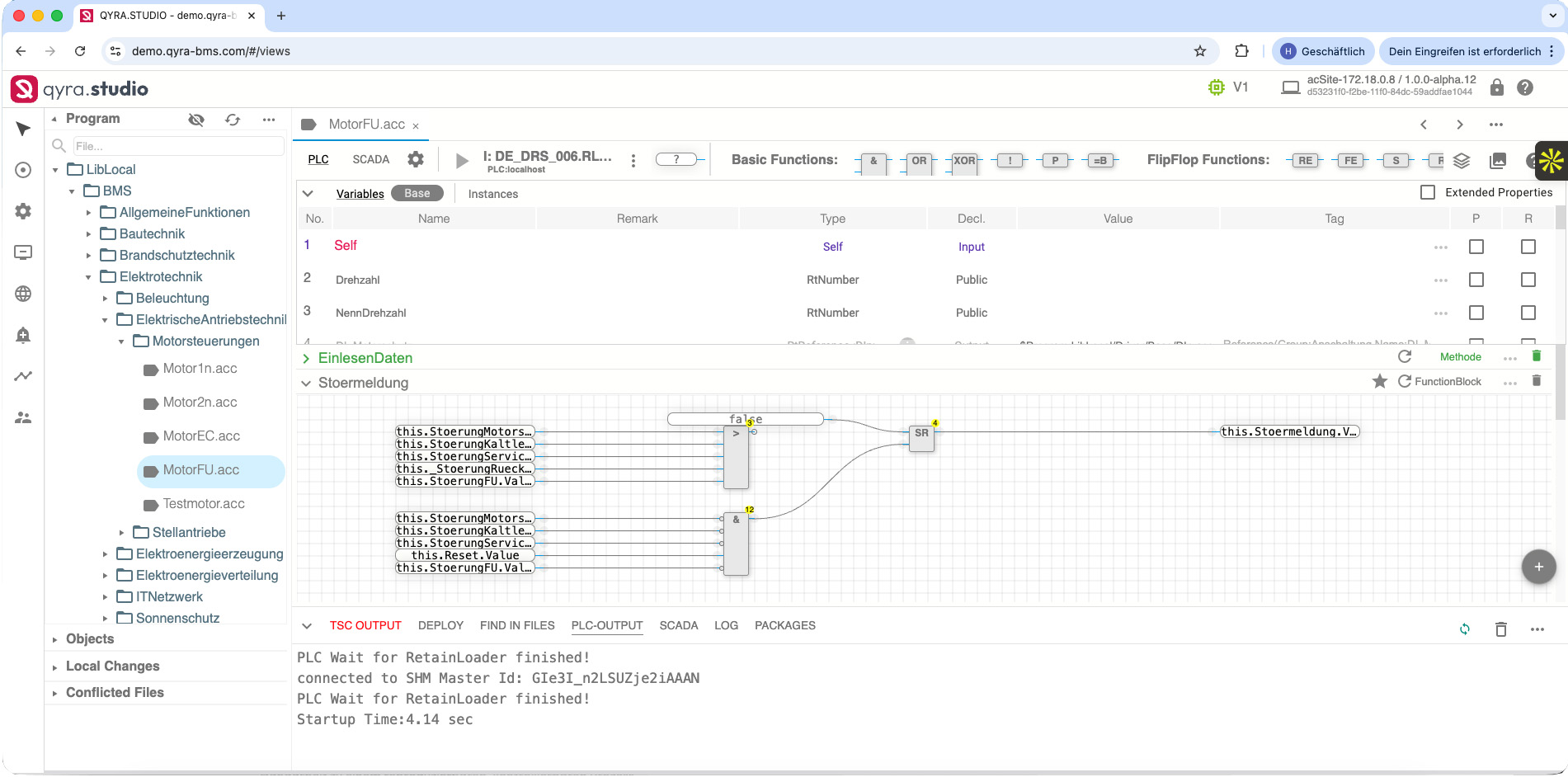
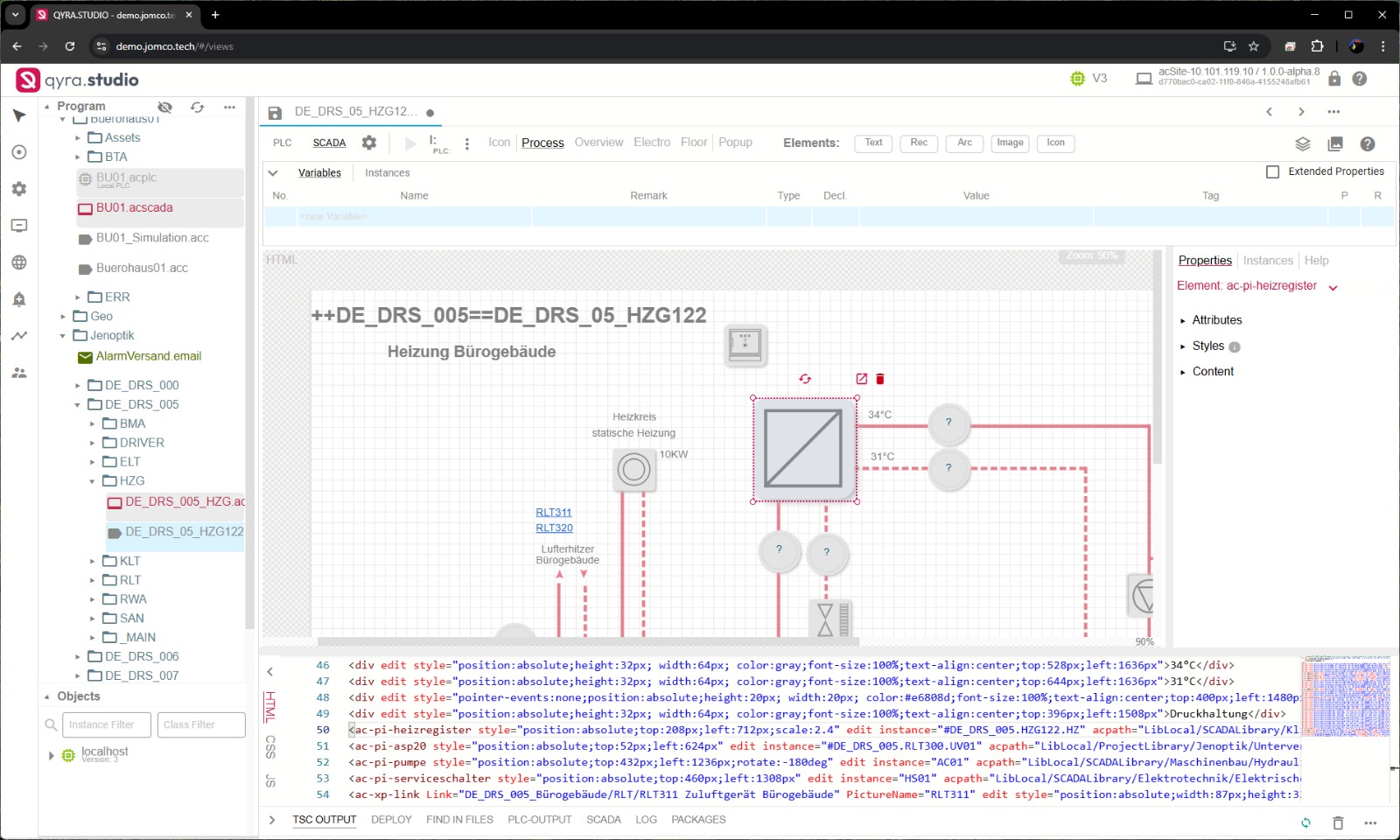
The integrated, web-based IDE is the workspace for implementing your projects. It enables you to edit logic, configurations, and project structures directly in the system—without local installation and independent of the end device.
For you, this means: a unified working context for everyone involved, always up-to-date project status, and significantly reduced organizational effort during implementation.
Generate instead of program
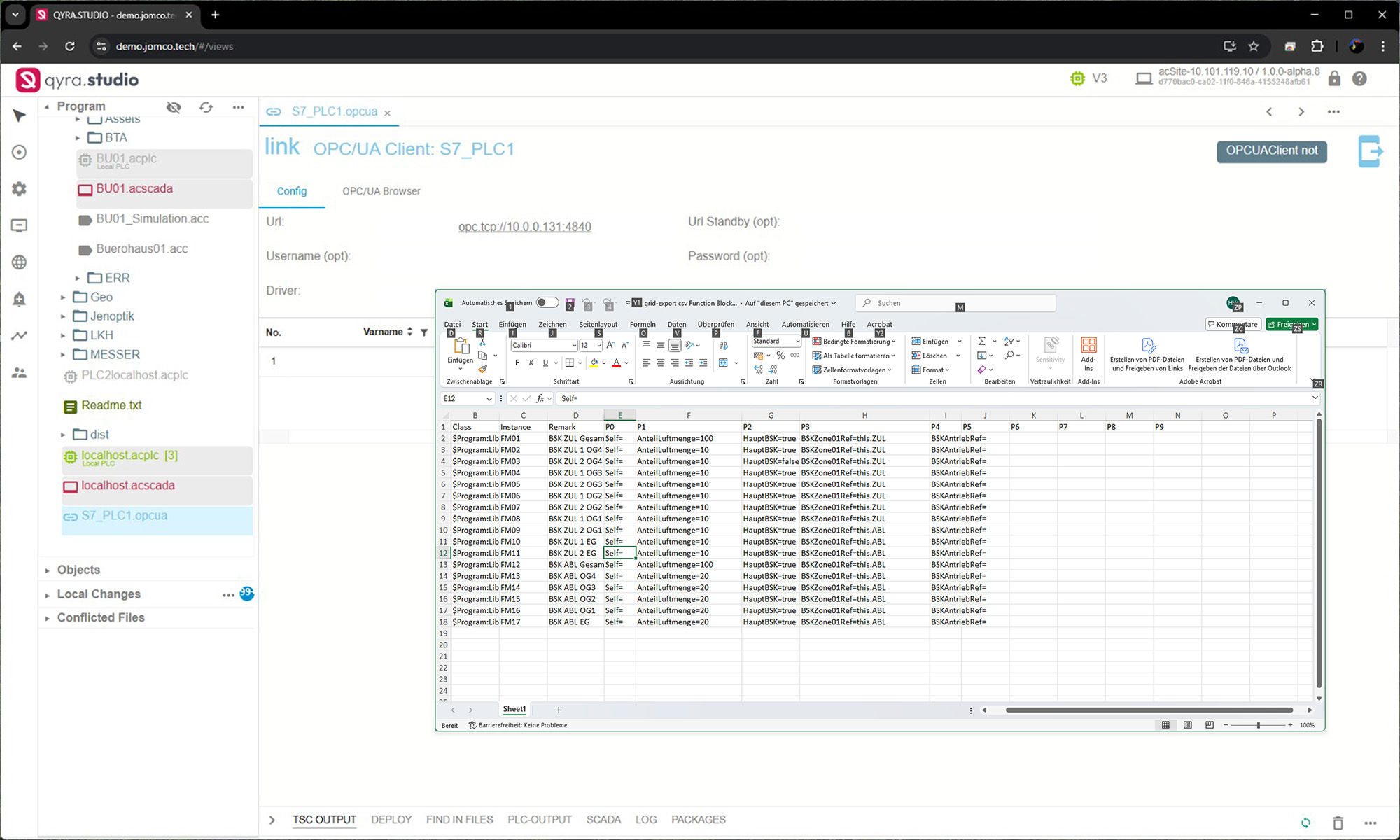
During the implementation phase, QYRA follows a generative approach. Instead of programming each project completely manually, systems can be generated from structured input data. Planning information from formats such as Excel spreadsheets or CAD/DWG data serves as the basis for the automated generation of entire project structures.
This approach fundamentally changes implementation. Recurring patterns, configurations, and logic are not implemented multiple times, but derived systematically. This reduces manual programming effort, minimizes sources of error, and ensures consistent results across large projects. BUILD thus shifts from individual manual work to a reproducible, controllable process.
Object-oriented approach
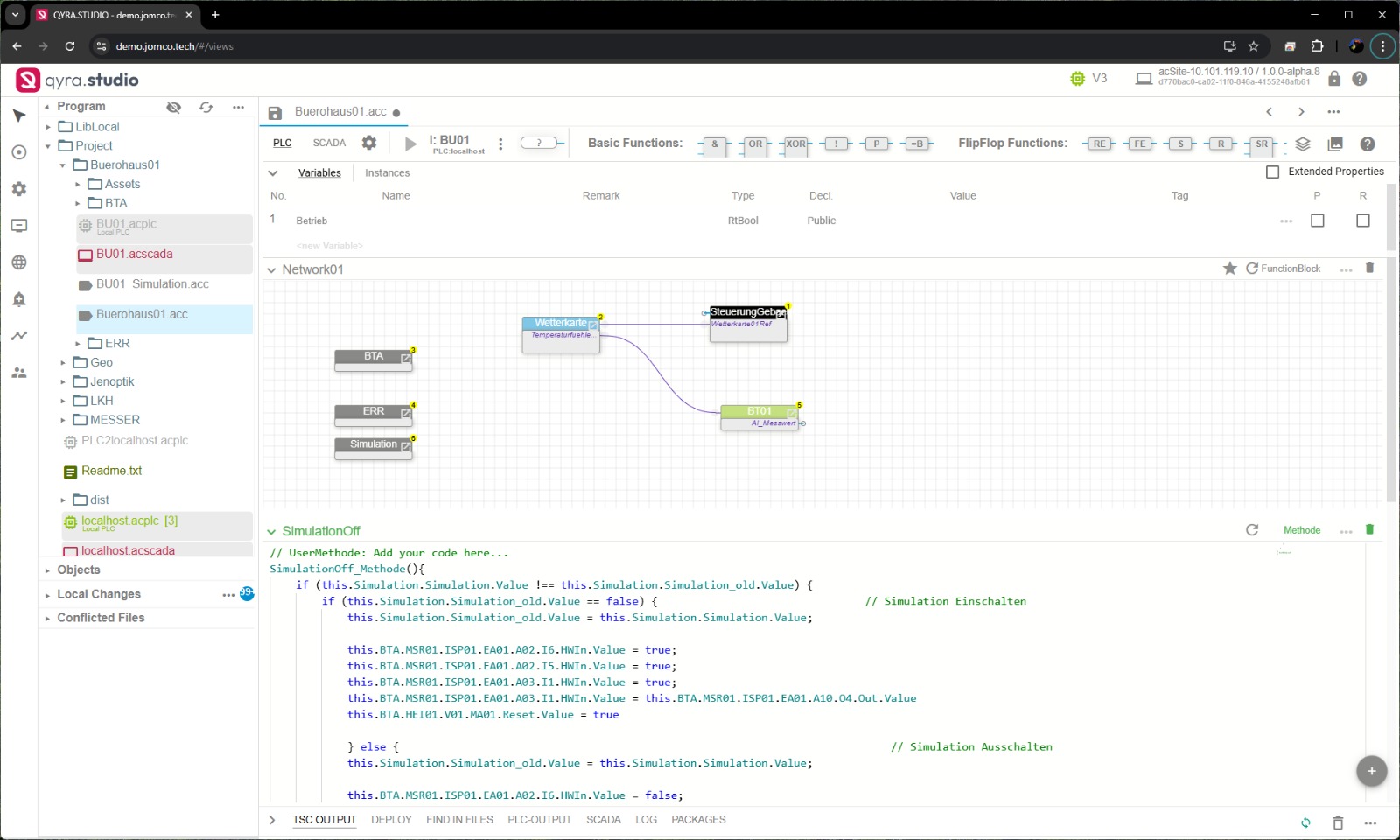
During the implementation phase, QYRA’s object-oriented approach ensures clear structures and efficient workflows. Functions are implemented as independent objects with defined behavior, clearly delineated responsibilities, and standardized interfaces. This allows individual parts of the system to be developed, tested, and integrated independently.
The benefit is immediately apparent during implementation: changes affect specific objects rather than the entire system. Reusable components reduce development effort, accelerate projects, and lower the risk of errors. Object orientation makes Build processes more predictable, more robust, and significantly more scalable—especially for larger plants and parallel development by multiple teams.
Web-based programming environment
QYRA provides a web-based programming and working environment that requires no local software installation. Access is browser-based and independent of the device used. Development, configuration, and project work can therefore be carried out consistently from any location.
This approach significantly simplifies collaboration and project organization. Everyone involved works in the same environment, with identical functionality and up-to-date project status. Complex installations, version conflicts, or individual workstation configurations are eliminated. As a result, BUILD becomes more accessible, more efficient, and easier to control—especially in distributed teams and larger organizations.
Modern high-level languages
During the implementation phase, QYRA deliberately relies on modern high-level languages. They enable clear structuring of complex logic, clean data models, and an understandable representation of cross-system relationships. Code becomes modular, readable, and maintainable in the long term—beyond individual projects and teams.
The key advantage lies in the scalability of implementation. High-level languages make it possible to develop, reuse, and extend systems efficiently without complexity growing uncontrollably. This makes Build processes faster, more robust, and easier to manage—especially for large plants, distributed systems, and long-term operated infrastructures.
Visualization based on HTML5
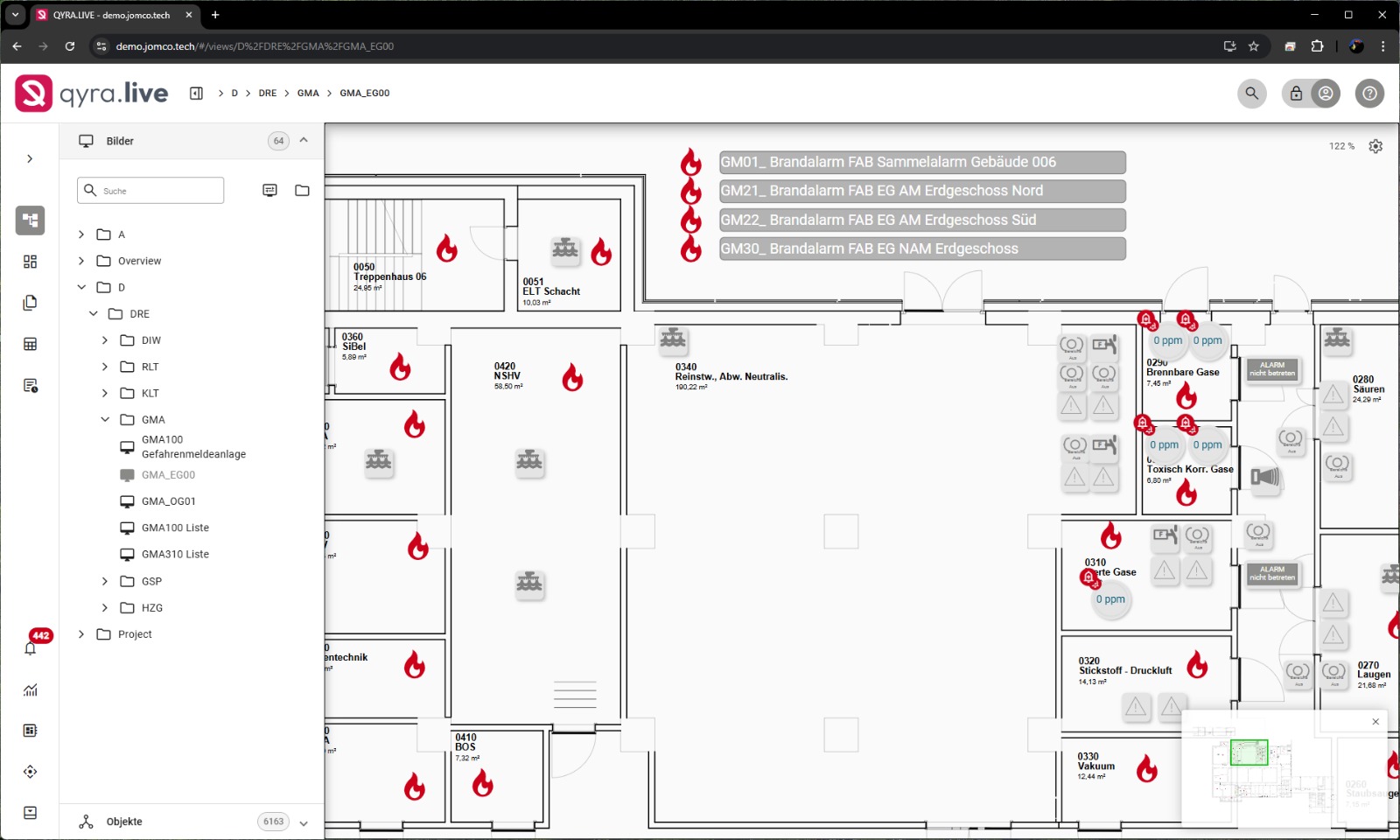
QYRA consistently uses HTML5-based technologies for graphical representations. As a result, visualizations are not tied to proprietary formats, but rely on a broad, established standard. Existing graphics, components, and design concepts can be used directly and further developed.
This approach opens up a wide range of existing resources and expertise. Experience from web development, UX design, and frontend technologies can be applied immediately without requiring specialized graphics or engineering tools. Graphics thus become flexible, future-proof, and maintainable in the long term—and remain closely linked to the underlying system logic.
Proven building blocks for your project
With qyra.store, QYRA provides a central repository of proven system building blocks. qyra.store includes reusable objects, functions, and modules that structure typical automation tasks. All content is based on real projects and designed for long-term use.
During the implementation phase, qyra.store significantly accelerates projects. Instead of developing basic logic from scratch, proven building blocks can be combined and adapted in a targeted manner. This increases quality, reduces risks, and ensures consistent systems across different plants and projects. qyra.store is not a marketplace, but a quality-assured system repository for reliable implementation.
Control, collaboration, and traceability
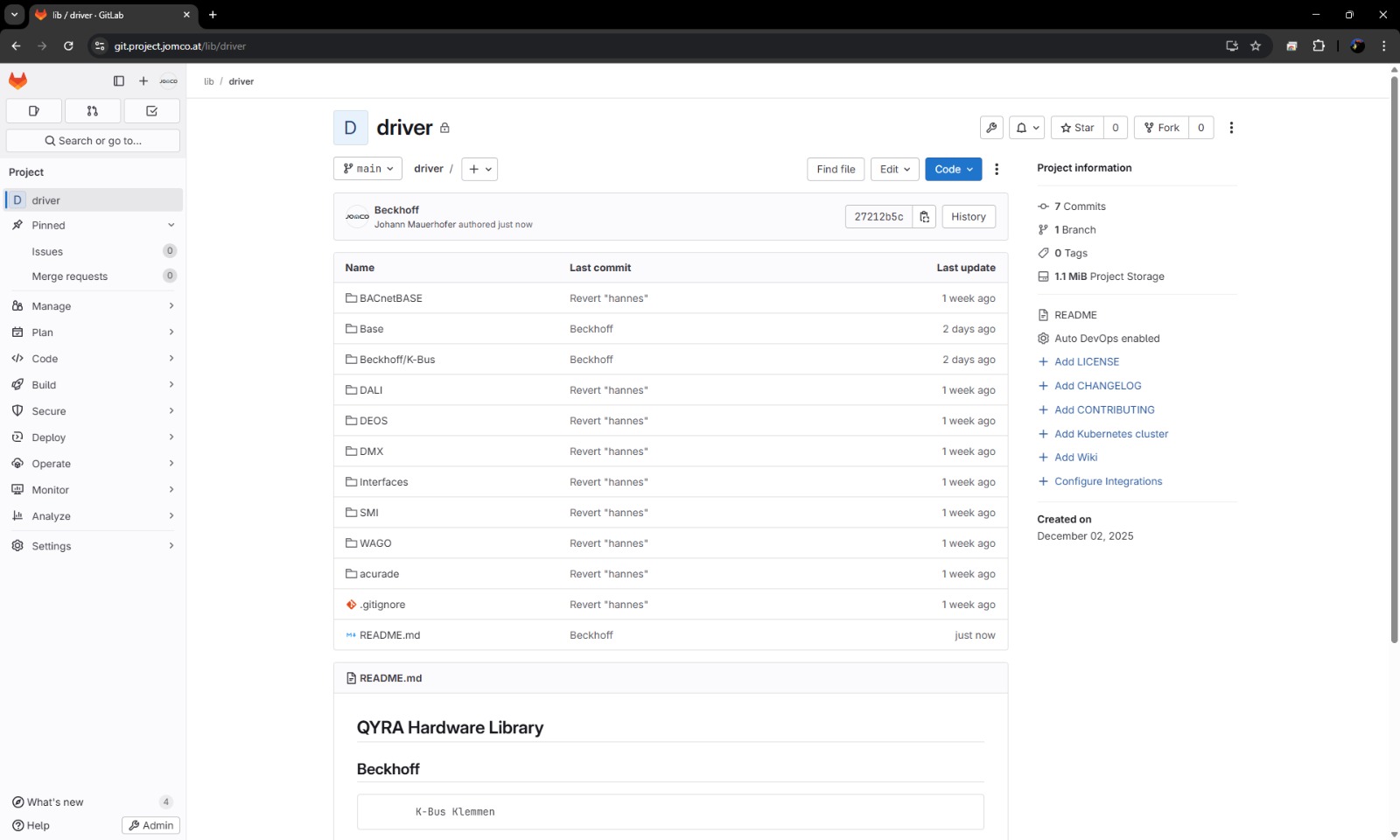
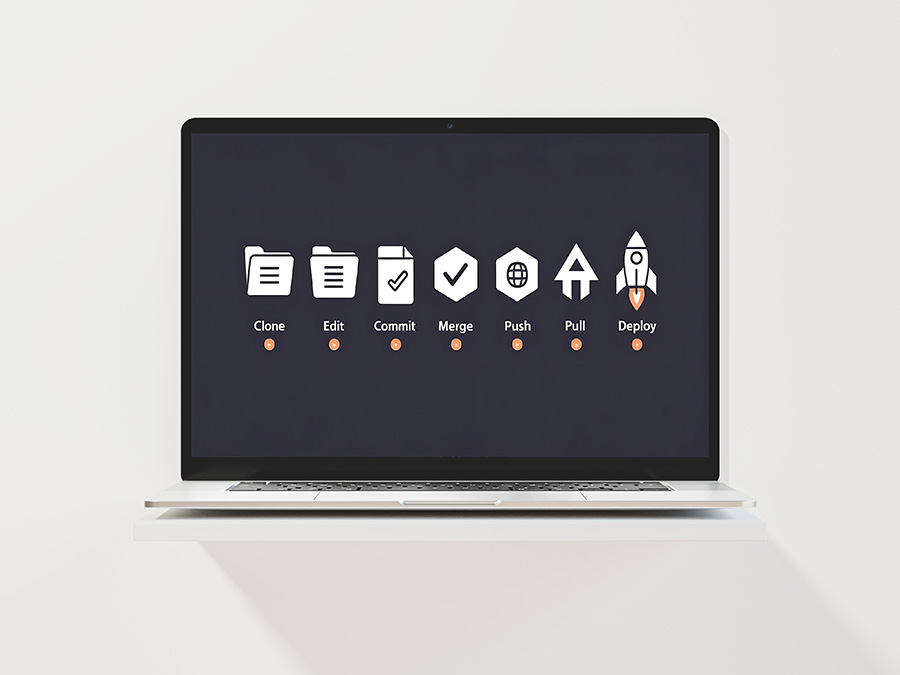
QYRA uses Git as a central element of project organization. Changes to systems are not only versioned technically, but also traceable organizationally: who changed what, when, and in what context is transparent at all times. This structures collaboration and makes responsibilities clearly assignable—even across project boundaries.
This traceability is particularly crucial in the context of NIS2. Git provides the foundation for documented change processes, reproducible system states, and controlled approvals. Organization, technology, and compliance interlock without creating additional documentation effort. Build thus becomes a manageable, audit-ready process.