Digital Twin First - Creating Structure Before Complexity Arises
QYRA.plan places the Digital Twin at the center of the early project phase. Even before systems are built or tools are selected, a consistent digital representation of the planned facility, infrastructure, or building landscape is created. Architecture, topology, interfaces, and operating models are systematically captured, reviewed, and simulated.
QYRA is deliberately not a traditional planning tool. Its strength lies in targeted technical support: Based on years of project experience, decisions are not only documented but modeled, compared, and evaluated in a comprehensible manner within the Digital Twin. Dependencies, risks, and scaling effects become visible before they lead to effort or limitations in operation.
PLAN creates orientation through a shared system understanding. The Digital Twin forms the reliable foundation for Build and Run—consistent, comprehensible, and usable throughout the entire lifecycle.
A Digital Twin for Planning, Operation, and Simulation
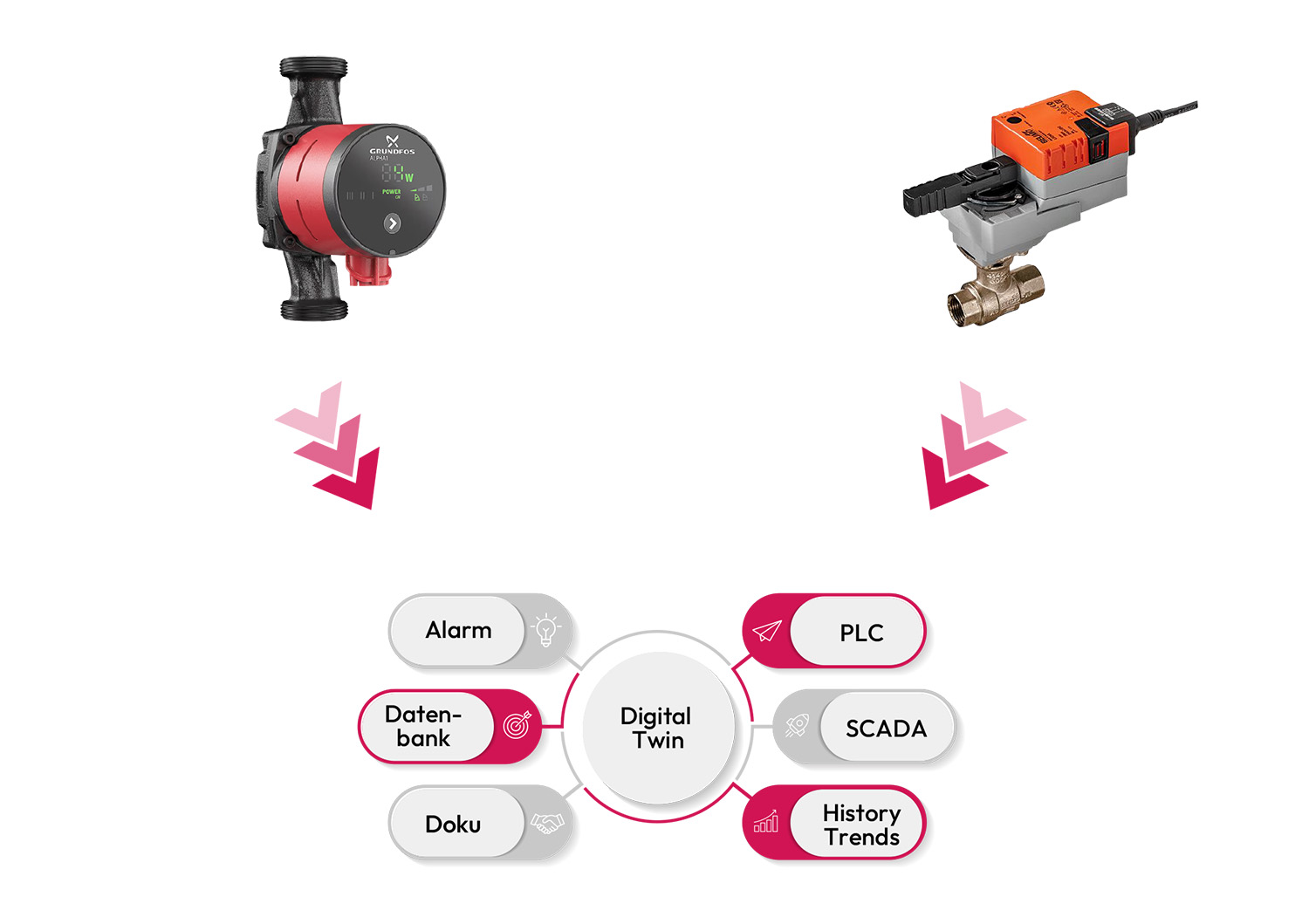
The qyra automation library provides a process-oriented digital twin for building automation.
All control and regulation functions are consistently structured around media and processes (air, water, energy)—not around devices. Lines (ducts, pipes, cables) form the central layer and connect systems, units, and rooms. Components communicate exclusively via clearly defined function-based interfaces.
This creates a modular, scalable, and manufacturer-independent architecture. The same model supports control, monitoring, and simulation without system breaks. The library is based on IEC 61131-3, extended with TypeScript, and is suitable for sustainable, long-term maintainable automation solutions throughout the entire lifecycle of a building.
Open, Tool-Independent Planning as a Stable Foundation for Your System
In the design area, qyra consistently focuses on openness and continuity. At the center is the Digital Twin as a consistent, system-neutral representation of the planned facility or infrastructure. It forms the common reference—regardless of which engineering tools are used for planning.
The platform is not tied to a specific planning tool but is deliberately designed so that existing tools can continue to be used. Planning data from common systems can be imported into the Digital Twin, structured, enriched, and reused there. At the same time, qyra supports the export of data to transfer planning statuses, documentation, or system models back into external tools or downstream processes.
This makes qyra the central data hub between planning, architecture, and implementation. Media breaks are reduced, changes remain traceable, and planning knowledge is preserved throughout the entire lifecycle. The Digital Twin ensures that a consistent, future-proof planning foundation is created regardless of the tool used, seamlessly transitioning into the Build and Run areas.
Hardware-Open Planning
QYRA is designed to be hardware-open and supports the systems and standards of all leading manufacturers established in building management technology. Planning and architecture are therefore oriented toward functional requirements—not hardware specifications.
This openness is crucial even in the planning phase. It enables the combination of the most suitable solution for each task, the integration of existing systems, and consideration of future expansions. Planning thus becomes flexible, comparable, and sustainable in the long term.
Flexible Topologies
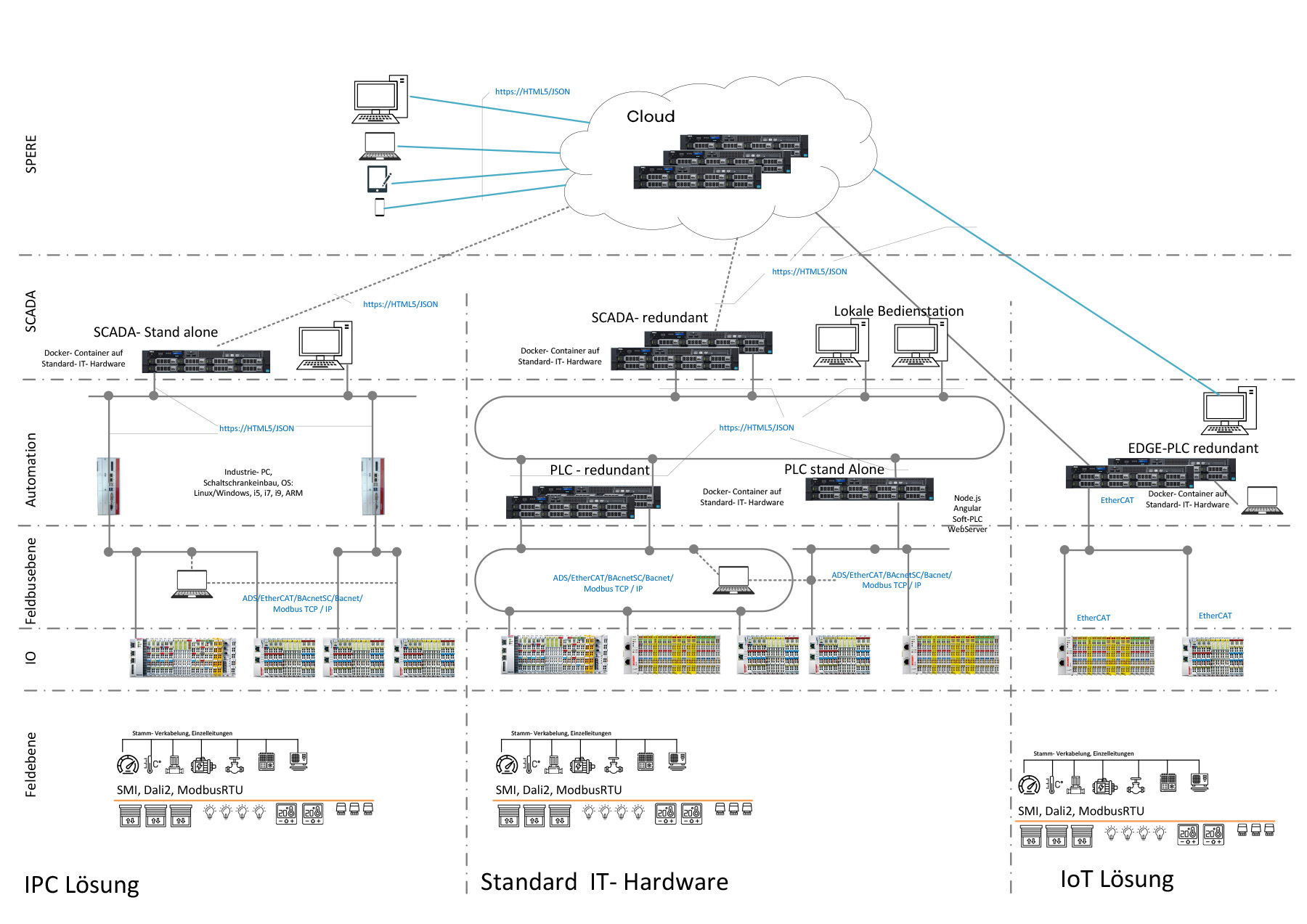
QYRA is open to different topologies and system approaches. In the planning phase, a deliberate decision can be made as to which structure suits the facility, organization, and security requirements. Classic concepts with independent controls per control cabinet, hybrid models with edge and cloud components, or IT-oriented architectures at the control level can all be represented equally.
This openness creates design flexibility. Topologies can be combined, gradually developed, or adapted to existing systems. QYRA does not commit to a specific architectural model but ensures that different approaches can be planned and operated within a consistent, documented structure—also with regard to requirements such as NIS2.
Platform Openness
QYRA is designed to be platform-open and is not tied to a specific operating system or runtime model. Systems can be operated under Windows or Linux, as well as in containerized environments based on Docker. Deployment on any operating system or in orchestrated environments is also possible.
This openness is relevant even in the planning phase. It allows system landscapes to be flexibly adapted to existing IT requirements, security needs, and operating models. QYRA thus supports both traditional installations and modern, IT-oriented architectures up to orchestrated environments, without losing the architectural consistency of the overall system.
Connectivity and Integration
QYRA is designed for integration from the outset. In the planning phase, it is determined how systems communicate with each other and which interfaces are used. QYRA supports common drivers and standards such as OPC UA, BACnet, Modbus, DALI, as well as other established protocols from building and industrial automation.
This openness enables meaningful connection of different systems, integration of existing infrastructures, and flexible addition of new components. Connectivity is not understood as a subsequent adaptation but as a structural component of the system architecture. This creates integrated solutions that remain technically consistent, expandable, and operable in the long term.
Buildings as a Structured Data Foundation
With qyra.bim, the digital building model becomes the central source of information in planning. Buildings, facilities, and technical systems are represented in a structured manner in the BIM model and form a common foundation for architecture, engineering, and automation. This creates an early, consistent understanding of the system structure and its relationships.
QYRA supports open BIM standards such as IFC and enables IFC import and export as well as direct viewing of models via IFC viewers. The information contained in the model can be connected with operational, automation, and monitoring data. This creates a continuous digital foundation across all project phases—from planning through implementation to later operation.
Understanding Systems Before Implementation
Simulation is a central component of the planning phase with QYRA. Architecture, topologies, and system behavior can be modeled and tested early before they are implemented. Assumptions become verifiable, variants comparable, and the impacts of decisions visible.
This reduces risks and validates decisions. Simulation supports not only the optimization of individual parameters but also the fundamental understanding of the system: how components interact, where dependencies arise, and which structure is sustainable in the long term. Planning thus gains depth and reliability—even before construction begins.
Knowledge That Stays With You
QYRA supports you in the planning phase with targeted training formats and a structured documentation and wiki foundation. You gain an early, shared understanding of the planned system architecture, its relationships, and the decisions made. This reduces dependencies on individuals and facilitates coordination between engineering, operations, and management.
All relevant content is documented in a comprehensible manner and made permanently available. Architectural decisions, assumptions, and foundations remain transparent for you—even across project phases. This creates planning certainty: knowledge is not lost, handovers become easier, and later implementation and operation benefit from a reliable knowledge base.